If you want a foothold in Mountain View without stretching to detached-home pricing, a condo or townhome may be the smartest place to start. You are likely balancing price, space, commute, and monthly ownership costs all at once, especially in a market where timing matters and inventory moves quickly. The good news is that attached housing in Mountain View offers clear options for different budgets and lifestyles. Let’s break down what to know before you buy.
Why attached homes matter in Mountain View
Mountain View is still a high-cost Peninsula market, but condos and townhomes offer a meaningful price step down from single-family homes. The City of Mountain View shows an end-of-2024 median home value of about $2.68 million for single-family homes versus $1.2765 million for condo and townhouse properties. That gap is one reason many buyers look to attached homes first.
Recent market snapshots also show a wide spread by property type. Redfin data cited in the research report shows 48 condos listed at a median price of $798,000 and 35 townhomes listed at a median price of $1.44 million. In practical terms, condos tend to be the lower-cost entry point, while townhomes usually offer more room and a more house-like setup at a price below many detached homes.
Market pace matters too. Zillow reported a March 2026 median sale price of $1.7467 million citywide with 9 median days to pending, while Redfin reports homes generally go pending in about 13 days. That means you may not have long to decide once the right property appears.
Condo vs. townhome in Mountain View
Choosing between a condo and a townhome is often about daily living as much as price. Both can work well in Mountain View, but they usually serve different priorities. The better fit depends on how much space you want, how hands-on you want to be, and how comfortable you are with HOA structure and costs.
What a condo usually offers
In Mountain View, condos are often one-level homes in shared buildings. Current listings in the research report show examples like top-floor units, open layouts, balconies, private patio entrances, in-unit laundry, and access to shared amenities.
Some condo communities also include features like a pool, clubhouse, elevator, playground, guest parking, hot tub, and garbage service. For many buyers, that means less maintenance and easier day-to-day living. If your priority is a lower entry price and fewer exterior maintenance responsibilities, a condo may be a strong fit.
What a townhome usually offers
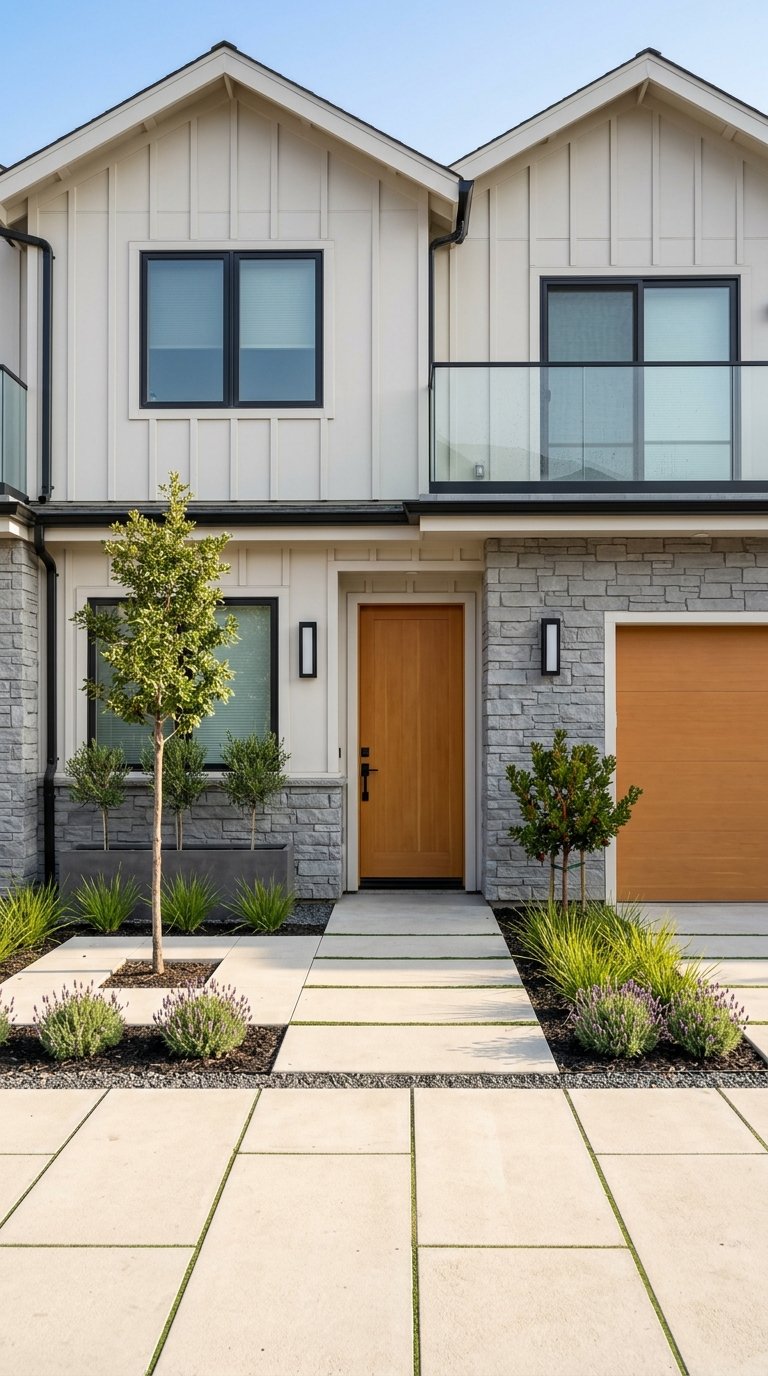
Townhomes in Mountain View are typically more multi-level and feel closer to a traditional house. Current listings show common features like private balconies, patios, and attached garages. That extra separation of space can appeal to buyers who want more flexibility for work, guests, or storage.
Townhomes also tend to sit higher on the price ladder than condos. With a median listing price around $1.44 million in the research report, they are often the middle ground between a condo and a detached house. If you want more room without taking on full single-family-home pricing, a townhome may offer the right balance.
What prices look like right now
Price range is one of the clearest differences between these property types. The research report shows current 1-bedroom condo listings around $519,000 to $689,000 in some cases. That gives first-time buyers, downsizers, and relocation buyers a more approachable entry into Mountain View ownership.
Townhomes are a different budget category. The report notes active examples such as a 3-bedroom, 2.5-bath end-unit at $1.68 million, which fits with the broader townhome median. If you are comparing options, it helps to think in tiers: condos at the lower entry point, townhomes in the middle, and detached homes at the top.
Look past the label
One of the most important California-specific points is that the word townhome does not tell you everything you need to know. According to California Department of Real Estate guidance, a condominium is a legal form of ownership, while a planned development can also have HOA-managed common areas and still look physically similar to a standard subdivision.
That means you should verify the recorded ownership structure before you make assumptions. Two homes that look alike on a listing site may come with very different legal rights, maintenance obligations, and HOA rules. In Mountain View, that distinction can affect both monthly costs and long-term resale considerations.
HOA review can make or break the deal
In attached housing, HOA due diligence is not a side issue. It is one of the most important parts of the purchase. Your monthly dues, reserve strength, rules, and future repair obligations can all affect affordability and financing.
The research report shows current HOA fees in example Mountain View listings at roughly $446 to $500 per month, though actual dues vary widely by community, building age, and amenity package. A lower monthly due is not always better if the association is underfunded or deferring major repairs.
What sellers must disclose in California
California law requires a substantial HOA resale disclosure package before transfer. Based on the research report, buyers should expect governing documents, current regular and special assessments, unpaid assessments and fines, approved but not-yet-due assessment changes, rental or leasing restrictions, requested board minutes, and the latest inspection report.
This package matters because it tells you what you are really buying into. A unit may look perfect on tour day, but the documents may reveal upcoming costs, policy limits, or maintenance issues that change the picture.
Why reserves matter
The California Department of Real Estate warns that underfunded HOAs can lead to deferred maintenance, special assessments, and financing challenges. Weak reserves can affect common elements such as roofs, exterior paint, roads, and pools. In some cases, special assessments can reach the tens of thousands of dollars.
California reserve-planning law also requires associations to maintain a reserve funding plan that includes assessment changes needed for long-term repairs and replacements. For you as a buyer, that means reserve health is not just an accounting detail. It is a real indicator of future ownership risk.
Questions to ask before you write an offer
Before you move forward on a condo or townhome in Mountain View, ask:
- What are the current monthly HOA dues?
- What do those dues cover?
- Are there any pending or recently approved special assessments?
- How strong are reserves for future roof, exterior, road, or amenity work?
- Are there rental caps or leasing restrictions?
- Is the HOA inspection history current?
These questions can help you compare homes more accurately. They also help you avoid focusing only on purchase price while missing the true monthly and long-term cost of ownership.
Commute and lifestyle are a big part of the value
Mountain View stands out because attached housing often lines up well with how people actually want to live here. The City says the street network provides direct access to US-101, CA-85, CA-237, El Camino Real, and Central Expressway. For many buyers, that makes condos and townhomes practical options for staying connected across the Peninsula and South Bay.
Transit is another major advantage. The downtown transit center serves Caltrain, VTA light rail, buses, and shuttles, and the City says it handles more than 12,000 boardings and alightings on a typical weekday. If you want flexibility beyond driving, that is a meaningful benefit.
Shuttles and car-light options
Mountain View also offers unusually strong local shuttle access. The City says the free Mountain View Community Shuttle has 50 stops and runs on weekdays and weekends. MVgo provides free shuttle connections from the transit center to North Bayshore, East Whisman, San Antonio, and downtown Mountain View.
That kind of network can make condo and townhome living especially appealing if you want to simplify your commute or reduce reliance on a car for every errand. It can also widen the range of neighborhoods and communities worth considering.
Downtown living has tradeoffs
Downtown Mountain View is a draw for buyers who want to be near restaurants, transit, and a more walkable environment. The City adopted pedestrian malls on Castro Street in 2022, and transit-center grade-separation and access work is in final design. That points to a downtown area that is continuing to evolve.
For some buyers, that is a plus. For others, especially those sensitive to construction timing or traffic changes, it is worth checking project status before choosing a building near Castro Street or the station area.
Who each option tends to fit best
If you are trying to narrow your search, this simple framework can help.
Condo fit
A condo may be the better choice if you want:
- The lowest entry price in Mountain View
- Less exterior maintenance responsibility
- Shared amenities like a pool or clubhouse
- A simpler setup for commuting or lock-and-leave living
Townhome fit
A townhome may be the better choice if you want:
- More square footage and separation of space
- Features like an attached garage, patio, or balcony
- A more house-like layout
- A middle-ground price point between condos and detached homes
Buy with both numbers and lifestyle in mind
The right attached home is not just the one you can afford today. It is the one that supports your routine, commute, risk tolerance, and future plans. In Mountain View, that means weighing list price against HOA quality, ownership structure, transit access, and how the home will function for you over time.
A disciplined buying process matters even more in a fast-moving market. When you compare condos and townhomes with clear criteria, you are more likely to move quickly for the right reasons and avoid surprises after closing.
If you are planning a move in Mountain View and want a data-driven, practical approach to comparing attached-home options, Savannah Wieser can help you evaluate pricing, HOA risk, and neighborhood fit with clarity.
FAQs
What is the price difference between condos and townhomes in Mountain View?
- Based on the research report, condos in Mountain View currently show a lower median listing price at about $798,000, while townhomes are around $1.44 million.
What HOA fees should buyers expect for Mountain View condos or townhomes?
- Current listing examples in the research report show HOA fees of roughly $446 to $500 per month, but actual dues vary widely by community and amenities.
What documents should buyers review for a Mountain View condo or townhome HOA?
- Buyers should review governing documents, assessments, unpaid amounts, approved assessment changes, rental restrictions, requested board minutes, and the latest inspection report.
What makes a Mountain View townhome different from a condo?
- In practical terms, townhomes are often more multi-level and house-like, but in California the legal ownership structure may differ from the marketing label, so you should verify the recorded property type and HOA obligations.
Why do attached homes appeal to buyers in Mountain View?
- Attached homes can offer a lower entry price than detached houses, reduced maintenance, and strong access to highways, transit, shuttles, downtown amenities, and major employment areas.